Generative AI data centers require substantial computational power and cooling systems to maintain operating temperatures, contributing massive load growth to the power grid, especially as the demand for AI models and services grows. In response to this challenge, PNNL, ASHRAE, and NEMA conducted an industry survey that revealed the need for collaboration, clear direction, standardization, ongoing engagement, knowledge sharing and education. To address these needs, the three organizations, in conjunction with several industry partners, created the AI Data Center Energy Performance Framework with the following objectives:
- Deliver a scalable framework for the efficient design, commissioning, retrofit, and operation of AI data centers
- Enhance energy and water efficiency through adoption of advanced technologies and best practices
- Support grid reliability and resilience by promoting load flexibility and grid-interactive operations
The PNNL/ASHRAE/NEMA AI Data Center Energy Performance Framework presents the guiding principles for building and operating energy-efficient AI data centers. With sections covering all stages of planning, design, construction, operation, and retrofit, this framework guides AI data center development toward optimized and energy-efficient performance. By doing this, the framework provides opportunities to lessen impacts on communities surrounding data center developments. What this framework does not do is establish mandatory requirements or supersede applicable codes and standards.
This framework covers all aspects of energy sourcing, energy use, and water use in data center design, construction, and operation. This framework recommends the most effective solutions across a variety of facility climate zones and load densities.
The following topic areas are covered in this framework:
- Introduction and Purpose
- Planning and Siting
- Integrated Design Principles
- Energy and Thermal Efficiency
- Grid-Interactive Design (Demand Flexibility)
- Resilient Design
- Commissioning and Performance Validation
- Operations and Maintenance
- Retrofit and Modernization Strategies
- Tools, Standards, and Resources
Each of these sections was authored and reviewed by professionals whose work relates to data center design, construction, or operation.
As AI technologies, grid conditions, and regulations evolve, this framework is expected to be updated to reflect emerging best practices.
Topic Areas Covered in the Framework
Author Acknowledgements
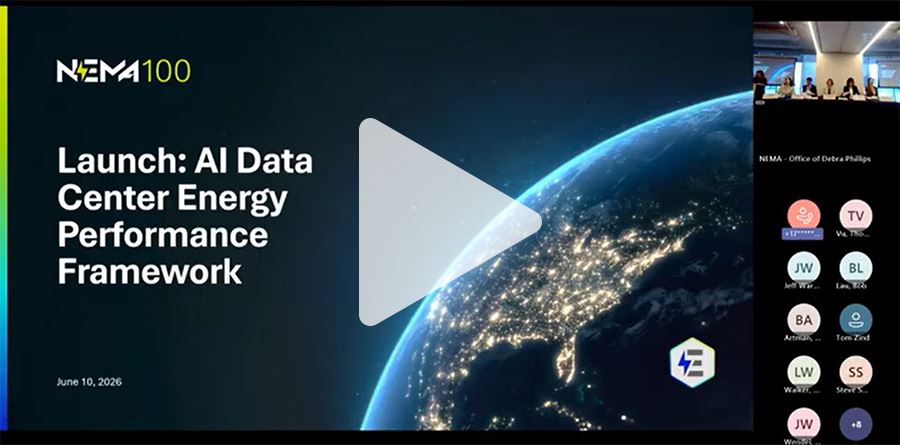
Panelist answer questions about the AI Data Center Framework at the
NEMA hosted launch
Watch Video
We’d like to hear from you: If you have any feedback on the AI Data Center Energy Performance Framework please leave us a note